
Exact thresholds by type of income in 2026
| Type of income | Threshold without filing | Legal basis |
|---|---|---|
| Employment (single payer) | €22,000 | Art. 96 IRPF Law |
| Employment (two payers, 2nd > €1,500) | €15,000 | Art. 96 IRPF Law |
| Capital returns (dividends, interest) | €1,600 | Art. 96.3 IRPF Law |
| Capital gains (cryptocurrencies, stocks) | €1,600 | Art. 96.3 IRPF Law |
| Sporadic jobs (single payer) | €1,000 | Art. 96.3 IRPF Law |
From how much money do you have to file taxes? (2026 limits)
It is the most searched question and the one that generates the most confusion, because the limit changes depending on where the money comes from and how many payers you have. Quick summary:
| Type of income | Limit for NOT filing |
|---|---|
| Employment · a single payer | €22,000 gross/year |
| Employment · two or more payers (2nd and subsequent > €1,500) | €15,876 gross/year |
| Economic activity (self-employed) | From the first euro |
| Capital and gains with withholding | €1,600/year |
| Imputed real estate income | €1,000/year |
Indicative figures for the 2026 campaign. Verify your specific case.
Frequently asked questions about filing limits
Penalties for invoicing without being self-employed
With a single payer, you are required to file starting from €22,000 in gross annual employment income. With two or more payers, the limit drops to €15,876 if the amount collected from the second and subsequent ones exceeds €1,500 per year.
From how much money per year do you have to file taxes as a self-employed worker?
If you perform self-employed economic activity, the obligation to submit the tax return exists from the very first euro invoiced. There is no exempt minimum as in employment income: if you have registered, you file.
How much can you earn per year without filing taxes?
It depends on the origin of the income. Employment income with one payer: up to €22,000. With multiple payers: up to €15,876. Capital income and capital gains subject to withholding tax: up to €1,600. Imputed real estate income: up to €1,000.
From what amount of money are you required to report rent?
Rental income counts toward the combined limit of €1,000 per year for real estate income when there are no other obligations. In practice, if you have a rented apartment, you almost always have to file.
If I don't reach the minimum, is it still a good idea for me to file?
Often yes. If you have had withholdings applied during the year and you don't reach the mandatory minimum, the tax return usually results in a refund. Not filing means giving that money away to the Tax Agency.
And if you already exceed those limits? Then the question changes: it's not whether you file, it's how you legally pay less. Start by seeing if it suits you to be self-employed or LLC with the free calculator.
General personal income tax limit: the €22,000 threshold
The main threshold is €22,000 gross per year when all your employment income comes from a single payer. If you do not exceed that amount, you are not required to file the income tax return in 2026.
This limit is set in article 96 of Law 35/2006 on Personal Income Tax and applies exclusively to employment income, not to capital income, capital gains, or economic activities.
- A single payer, up to €22,000: no obligation to file
- Two payers, second up to €1,500: remains at €22,000
- Two payers, second > €1,500: drops to €15,000
These thresholds determine the formal obligation to file the tax return. Having an obligation does not mean paying: you may be required to file and have the result be zero or even a refund.
Digital platforms: Airbnb, Wallapop, Vinted, OnlyFans
Since 2023, the DAC7 Directive obligates these platforms to report the income of their Spanish users to the AEAT when they exceed certain thresholds. In 2026, the AEAT already cross-references this data automatically with the tax returns.
Airbnb: reports hosts with more than €2,000 or 25 operations per year. Income classified as real estate capital income.
Wallapop and Vinted: the sale of personal items without profit is not taxed. With profit or systematic activity, it is. They report sellers with >30 operations or >€2,000.
OnlyFans: economic activity income. No minimum threshold: any income must be reported from the very first euro.
Cash income: what the AEAT monitors
Collecting cash does not eliminate the obligation to report it. Law 11/2021 limits cash payments between business owners to €1,000 per operation. Exceeding the limit carries a penalty of 25% of the amount. Between private individuals, the limit is €10,000.
Real penalties for not filing in 2026
Failing to file the tax return when required carries a minimum penalty of €150. The complete scale:
- Minor infraction: 50% of the unpaid fee
- Serious infraction: 50% to 100% of the fee
- Very serious infraction: 100% to 150% of the fee
- Without economic prejudice: fixed fine of €200 (reduced by 50% if filed without a requirement)
- Late without a requirement: surcharge from 5% to 20% plus late-payment interest
If the AEAT detects undeclared income exceeding €120,000, it can result in a tax crime (art. 305 CP) with prison sentences of 1 to 5 years.
In the complex world of tax regulations in Spain, a recurring question among taxpayers is: How much money can I earn without reporting it? Minimum amount to report to the tax office? These questions are crucial to ensure compliance with tax regulations and avoid potential penalties.
In Spain we live in a Tax Hell, many people wonder if by registering they can make their business a profitable activity; however, there are ways to avoid this, saving a monthly fee for working, VAT, personal income tax, agencies, invoices and the big problem of having to deal with will demand that you keep paying taxes here..
Index
What does the Tax Agency say?
Definition of Taxable Income:
- According to the personal income tax law, all income from economic activities, including e-commerce and the provision of services, is considered taxable income and must be reported if it exceeds €1,000 per year.
Calculation of Net Returns:
- To determine if it is necessary to file, expenses incurred to generate that income must be subtracted from gross income. If the net result is less than €1,000, it is not necessary to file.
VAT Obligations:
- All activities that generate income are subject to VAT, except those that are sporadic, free of charge, or specifically exempt according to the VAT law.
- Supreme Court, seem to position themselves in favor of the self-employed registration not being mandatory for those who do not obtain income in an amount that exceeds the Interprofessional Minimum Wage (currently at €9,907.80 on an annual basis).
The AEAT has been regularly informing the Social Security Treasury, or even, both entities share information of individuals who register for Tax Purposes for economic activities. The TGSS very frequently, based on this information, requires RETA registration for the person who has registered for tax purposes.
If this registration does not occur, the TGSS can generate an ex officio registration.
The TGSS frequently does not respect the courts' criteria regarding not exceeding the Interprofessional Minimum Wage. Enforcing this criterion can place you before the need to appeal judicially depending on the administrative resolution.
1. Minimum amount to file the income tax return
In Spain, the annual income limit that exempts you from the obligation to file the income tax return is set at 10,000 to 22,000 euros according to the interpretation of the minimum wage.. This threshold is established based on rulings by the supreme court in cases where the tax office penalty has been appealed, these limits may vary if it is a single payer or multiple payers. In the case of a single payer, the limit remains at 22,000 euros per year. But if you have obtained income from more than one payer during the year, the limit is reduced to 14,000 euros. In other words, if you have worked for several companies or sources of income, and the total sum exceeds 14,000 euros, you will be required to file the income tax return.
2. To declare or not to declare: The Taxpayer's Dilemma
A key point when making this crucial decision is the nature of your activity. If your clients ask you for an invoice, sooner or later you will find yourself obliged to register as a self-employed worker, create a corporation, or set up a structure abroad.
Another factor to consider in this choice is your personal situation, since certain nominal expenses, such as rent, vehicle, or children, can influence your decision. In this case, if you choose to make these payments informally (in cash for example, known as "B"), the Spanish Treasury could knock on your door at some point.
Therefore, it is important to know the Spanish tax system well before making a decision. Make a business plan calculating what margin would be left if we add the self-employed fee (cuota), VAT (IVA), personal income tax (IRPF), and accounting management expenses. You can contact us to give you support in this analysis and propose options; at EluTax we specialize in Tax Optimizations.
- The most important requirement is that the activity is not habitual.This means that you carry out the same on an occasional basis. If this is the case, you will not have problems issuing an invoice without being self-employed. The point is that if it does not represent an extra income, but rather is your livelihood, you would be forced to contribute to social security as such.
- Not generating income higher than the Minimum Interprofessional Wage (SMI). In other words, your activity cannot yield you income greater than the minimum monthly gross salary established in Royal Decree 231/2020. Mind you, watch out! The Self-Employed Work Statute does not establish a fixed amount of money to have to register or not, but there is jurisprudence that establishes the SMI.
3. Banks and Their Role in Tax Compliance
It is important to highlight that one of the first entities that usually gives notice regarding tax compliance are the banks in Spain. They are obliged to cross-reference data with the Spanish Treasury; if it does not appear to them that you are an individual or have a job, due to money laundering, they can issue a notification forcing you to justify the income in compliance with the money laundering law.
What do banks ask you for when they make an information request? Justification of income and sometimes expenses as well.
By Spanish Banks we mean banks with a Spanish IBAN, traditional ones like Caixa, Santander, BBVA etc., if you want to avoid this you can opt for Neobanks like Wise, Payoneer, Monese etc.
4. How to Justify Your Income?
If you find yourself in the situation of having to justify your income, it is essential to be able to prove the lawful origin of the funds. This implies providing documentation that supports the source of the money, such as an inheritance, the sale of an asset, income from work, Wallapop, trading, betting, among others.
5. LLCs from Spain: Companies Abroad
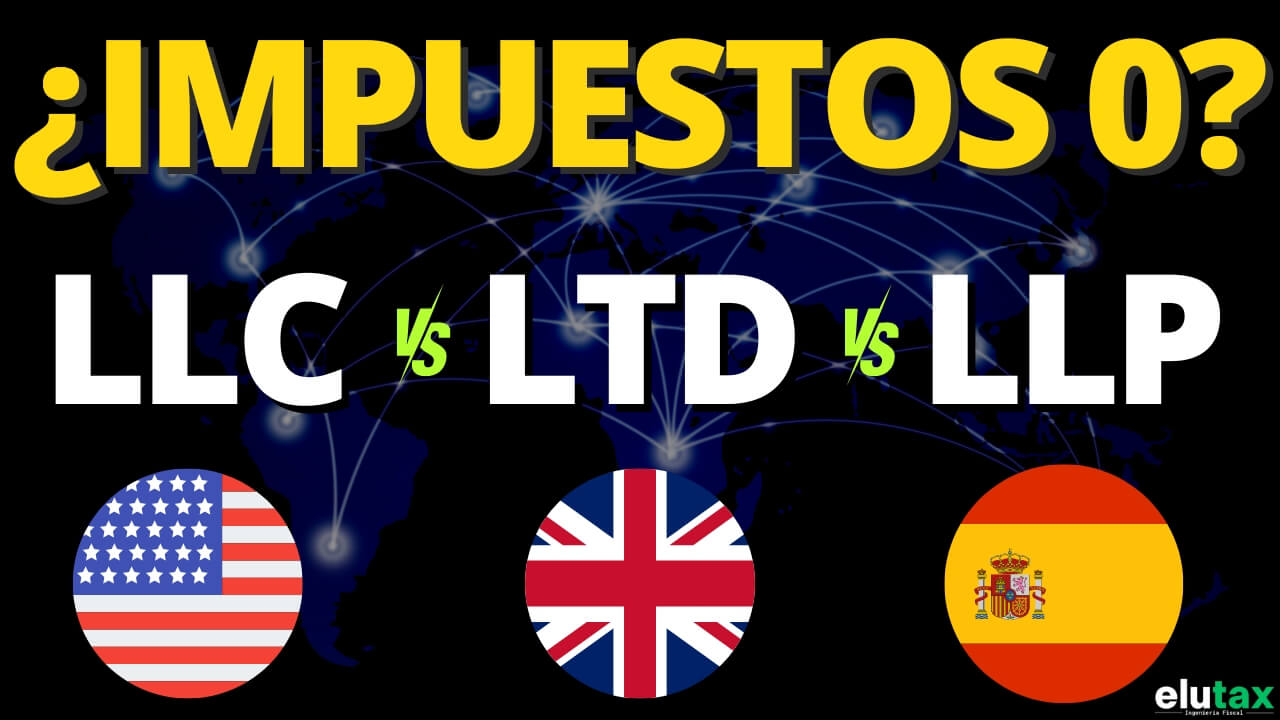
A strategy that has gained relevance in the tax field in Spain is the creation of LLCs in the United States (Limited Liability Companies). These entities provide a series of tax advantages, especially for those who wish to avoid registering as self-employed workers.
LLCs are considered pass-through corporations, which means that the income the LLC has is attributed to you personally, "obliging" you to declare that income on the tax return of your country of tax residence. However, below I present some of the advantages of LLCs compared to figures like self-employed or corporations in Spain.
LLC Advantages (Non-Residents)
🟢Ease of creation –Creating an LLCis a very quick and easy process to do, you can create the company yourself and within a week start invoicing with it. (Later I'll teach you how to create an LLC for $300 in Delaware)
🟢Cheap to maintain– LLCs have no maintenance cost other than state fees which are "cheap"
🟢0 Taxes –If you have no sales in the USA you will not have to pay taxes there other than state fees, depending on the state you will pay $50 – $300 per year. The responsibility for tax payment will therefore be yours as an individual in Spain (I will talk about this later)
🟢Anonymity –There are states in the USA where the information of LLC members is private. The USA will not hand over information unless there is a crime relating to your LLC. Some states that have this privacy are Delaware, Wyoming, New Mexico, Ohio...
🟢Tax Filing –LLCs file taxes once a year, plus you don't have to keep accounting since the forms to be filed (5472 and 1120) do not ask you for that data.
🟢No Accounting– The IRS asks you for sales data, expenses, and balance info on your bank accounts. It actually wants information on capital movements to the member directly or indirectly. Therefore you have the option not to keep accounting, however it is recommended for your business, at least in a general way, not invoice by invoice like in Spain.
🟢"Deductible" Expenses –The IRS is very permissive with non-nominal personal expenses; if your single-member LLC is sole proprietorship, you can pay for food, gas, electricity, and even rent as long as you spend with the company account. (Expenses that have to do with your activity)
🟢Limited Liability – Corporate veil, just like a corporation, LLCs have limited managers' liability, if you receive a lawsuit your personal assets will not be involved.
🟢Bank accounts and payment gateways– With LLCs you can create bank accounts in a wide variety of banks and gateways despite not being American, I recommend Mercury, Wise, PayPal, and Stripe.
🟢You don't have to be self-employedto have an LLC, even if you have earnings you are not obliged to register as self-employed.
Types of Income That Must Be Declared in Spain
Taxation in Spain covers a wide range of income sources, and it is important to know which of these must be declared. Below, we list some of the incomes that generally require being included in the tax return:
Work Income (Earned Income): This category encompasses income derived from wages, salaries, pensions, unemployment benefits, and any form of compensation for labor services. Generally speaking, taxpayers who have received an annual gross salary greater than 22,000 euros from a single payer are obliged to declare this income.
Capital Income: This is where interest, dividends, and capital gains obtained through investments come into play, such as bank accounts, stocks, investment funds, properties, purchase and sale, etc.
Economic Activities Income: People who are self-employed, such as professionals, artists, and merchants, must declare the income generated by their economic activities.
Leases and Rents: Income coming from rentals of real estate properties, whether residential or commercial premises, also falls into the category of income subject to declaration.
Real Estate Capital Income: This includes income derived from the rental of real estate, such as homes or commercial premises. These yields must be declared in the corresponding section of the income tax.
Other Income: Income coming from other sources, such as lottery winnings or inheritances, must be declared in specific situations.
Conclusion
It is difficult to get a business off the ground with a tax system so unfavorable for entrepreneurs, making money is not easy, and seeing how an inefficient state squanders public funds having taken more than 50% of your income is frustrating.
Fortunately, there are certain margins that allow a certain flexibility. Whether taking advantage of the limit of 14,000 euros per year or 22,000 euros if they come from a single client, or considering options like LLCs, LTDs, or OÜs in Estonia, opportunities open up to more efficiently manage your tax obligations.
Do you have international income or multiple payers?
We analyze your tax situation and tell you exactly what you must declare and how to optimize it legally.
Consult with EluTax →